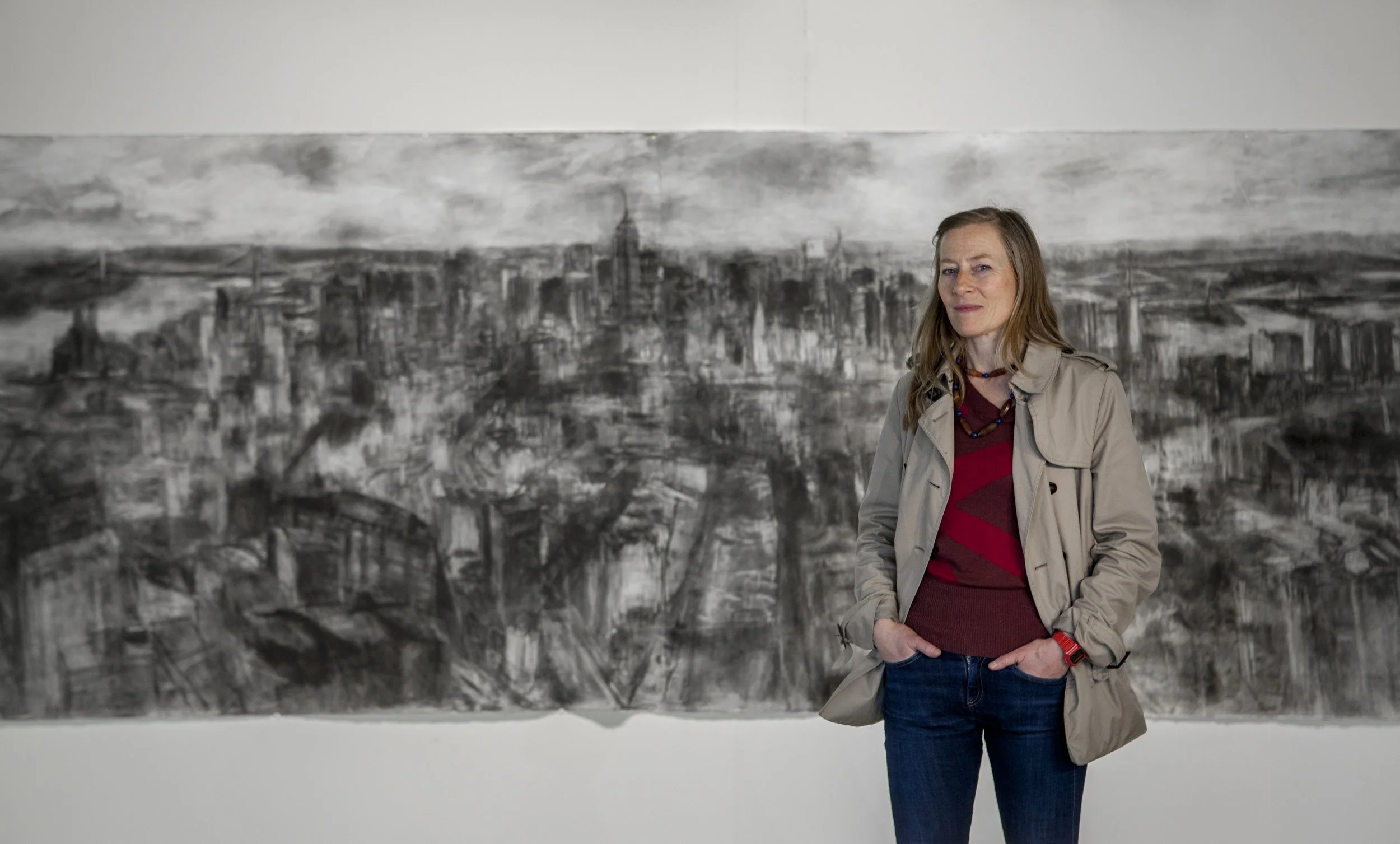
Exhibition: Five Point Arts, Connecticut :Remembering Ground Zero : 20th Anniversary Show
Remembering Ground Zero : 20th Anniversary Show https://fivepointsarts.org/2021/08/17/remembering-ground-zero-20th-anniversary-show/
Catalog and Return of a View, a short documentary film by Eivind Tolaas, Norway
Norwegian Library : Link to the short documentary film : Please contact us if you need a link to view the film
https://filmbib.no/perma/6207fc08790202a71faf97a1f9e8ded6
Film is made at the 9.11 National Memorial Museum and and in Norway.
Catalog text:
The Return of a View
Jan Seidler Ramirez, Chief Curator & Executive Vice President of Collections
New York June 2021
What does it mean to return a “view” to its place of origin and inspiration when the place no longer exists? Is it advisable to memorialize a lost view at a site where a mass human atrocity unfolded, recasting the address as an unplanned cemetery to those unfinished lives? Such questions of wayfinding and etiquette accompanied the notable 2017 donation of Torild Stray’s New York Metamorphosis to the National September 11th Memorial & Museum.
Almost twenty years earlier, Stray had served a twelve-month residency at the World Trade Center as one of an annual cohort of artists chosen by the Lower Manhattan Cultural Council for its competitive “World Views” program. From the temporary studio spaces assigned to her --first on Floor 91, then on Floor 85 of Tower One-- she absorbed the panoramic views and atmospheric drama that surrounded her. Born that aerial stay was this stunning 15-foot wide charcoal drawing of Manhattan’s densely-built cityscape looking north. The composition includes many familiar landmarks including the Empire State Building [upper center] and stretches of the Hudson and East Rivers [eft; right]. Today, the footprint of the former 110-story North Tower survives as one of the paired acre-size pools dominating the horizontal Memorial Plaza, the soaring verticality of the Twin Towers, absent evermore. 2983 names edge these two waterfall voids, individualizing the victims of the 2001 terror attacks and the February 1993 precursor bombing of the Trade Center.
Installed within the Memorial Museum, Stray’s drawing provides a two-fold opportunity to consider the view in its pre-9/11 and post-tragedy contexts. Like many participants in the World Views program in the latter 1990s, the artist was exhilarated by the expansive sky and mesmerizing weather patterns outside the narrow window slats of her studio. She was also intrigued by the architectonic forms and animation of New York City visible 870 feet below. Those dynamics influenced the work emerging from her residency. An “inner vision took hold,” driving her to deconstruct the city and then rebuild it, Stray explained to colleagues at the Lower Manhattan Cultural Council. “I came to see the buildings as extensions of human beings which took the place of figures in my paintings. At a higher level of abstraction, the city itself was an organic being: alive and constantly changing.” The artist’s fluid, confident draftsmanship aided her efforts to translate that perpetual transience onto paper
The view’s timestamp is also significant. Stray commemorates the special chemistry of dusk, not the clarity of daylight nor the deeper mystery (and glamor) of Manhattan after dark. In her native Norway, this distinctive twilight passage -referenced as “the Blue Hour” – is understood more as a verb than a noun, she has noted. The artwork’s title, New York Metamorphosis emphasizes that concept of flux. Intellectually, however, the title also allows readings of the drawing imported by visitors familiar with the events of September 11, 2001.
Impermanence is New York’s hallmark. Although natural disasters and economic slumps have compelled municipal transformation, purposeful change has been New York’s lifeblood for centuries. Nothing stays fixed here for long when there are ever newer, more profitable improvements on yesterday’s solutions. Nothing, however, could have prepared New Yorkers for the impact of the sudden, deadly terror attacks of 9/11. The catastrophe ambushed the City’s optimism, shattering our assumptions of collective safety The prestige of Manhattan’s hi-rise skyline was called into question. If passenger planes could be weaponized as war missiles, the city’s airspace was no longer innocent. These changes were uncharted.
Though predating the 2001 attacks, New York Metamorphosis records the same north-facing view seen by occupants of Tower One’s upper floors that fateful Tuesday morning. Around 8:45 a.m., the promise of a cloudless blue September sky shifted when a Boeing 767 jet – soon identified as hijacked American Airlines Flight 11 out of Boston –deviated its flight path. After rapidly descending south over Manhattan, it torpedoed into the North Tower, the plane’s lower wing slicing into the building two floors above the studio space that Torild Stray first occupied on Floor 91. Today, that impending tension can by overlaid onto the drawing by museum-goers who remember the awful spectacle of the Towers on fire and collapsing, and the plight of those trapped inside. They, too, may read a fatefulness in the work’s title, aware of the transformative consequences of 9/11 for the City, the nation, and world at large.
The drawing’s placement within the Museum merits explanation. With absence of the vertical codified in the design of the outdoor memorial, omitting the possibility of creating a new aboveground facility for exhibitions, most of the historical narration of 9/11 mostly unfolds underground. Out of necessity, the memorial plaza serves as the museum’s roof. Understandably, this entry path can generate spatial confusion those anticipating some kind of upward-looking acknowledgement of the destroyed Towers. Instead, museum guests are greeted 30-feet beneath the original World Trade Center, at the Concourse level of shops and transit corridors once serving the complex. From this point, they descend to primary galleries located seven stories below, at bedrock. To assist with reorientation, the Concourse Lobby space presents a limited selection of artifacts and images evidencing the physical landmarks that formerly occupied the site. Reckoning with, and paying respects to this erased place prepares visitors for the accounts of human loss (as well as courage, compassion, resolve and resilience) shared in the anchor exhibitions awaiting them below. New York Metamorphosis is now integrated into this strategic Concourse level introduction. It is rewarding to watch people study the framed drawing as it provokes wonder and topographical musings not unlike the responses experienced by Torild Stray when this incomparable view was hers for twelve months.
Jan Seidler Ramirez, Chief Curator & Executive Vice President of Collections
New York June 2021
New York Metamorphosis, 1998
Torild Stray
Charcoal on paper
Collection 9/11 Memorial Museum, Gift of Petter Neslein, Pecunia AS
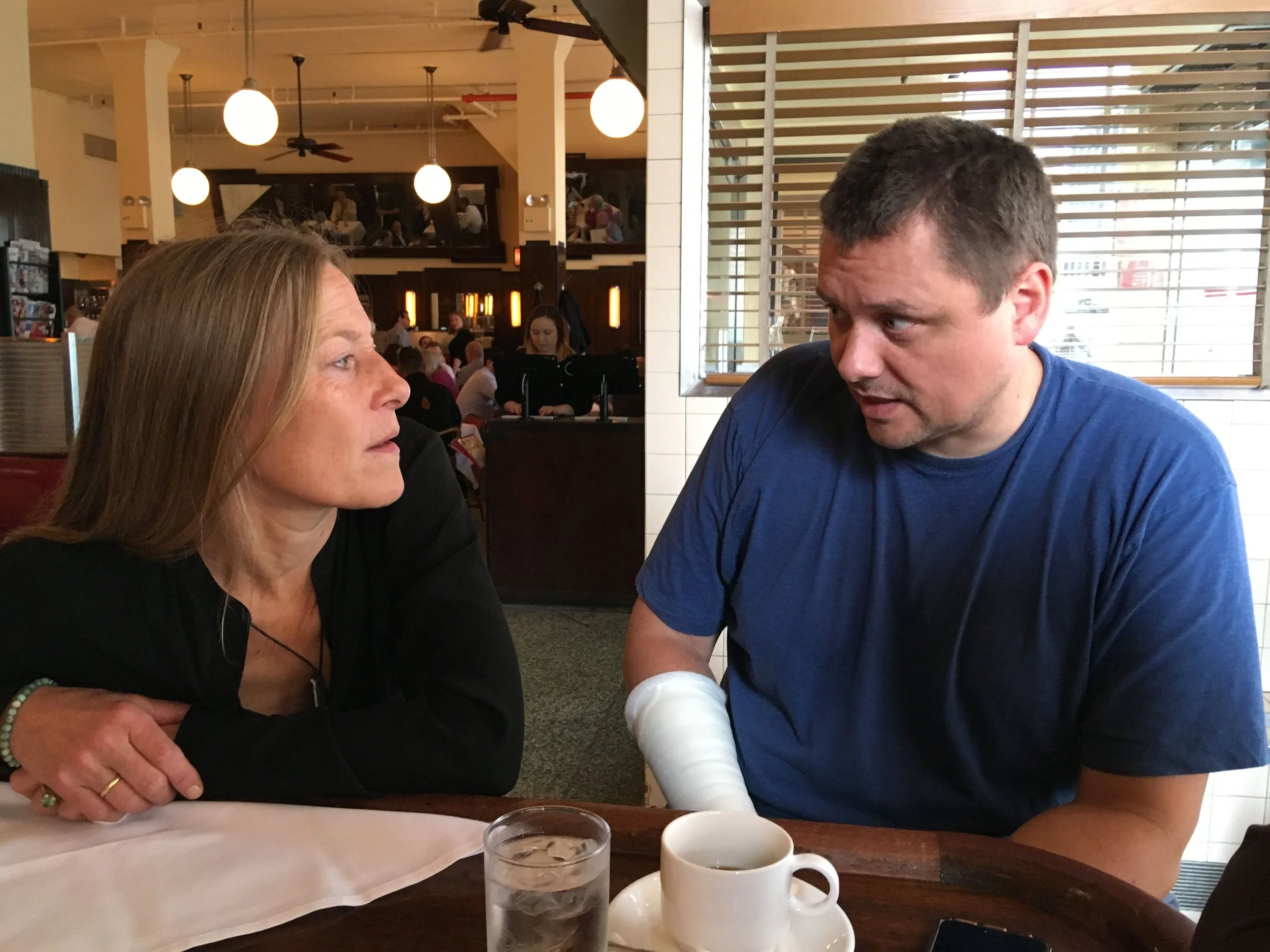
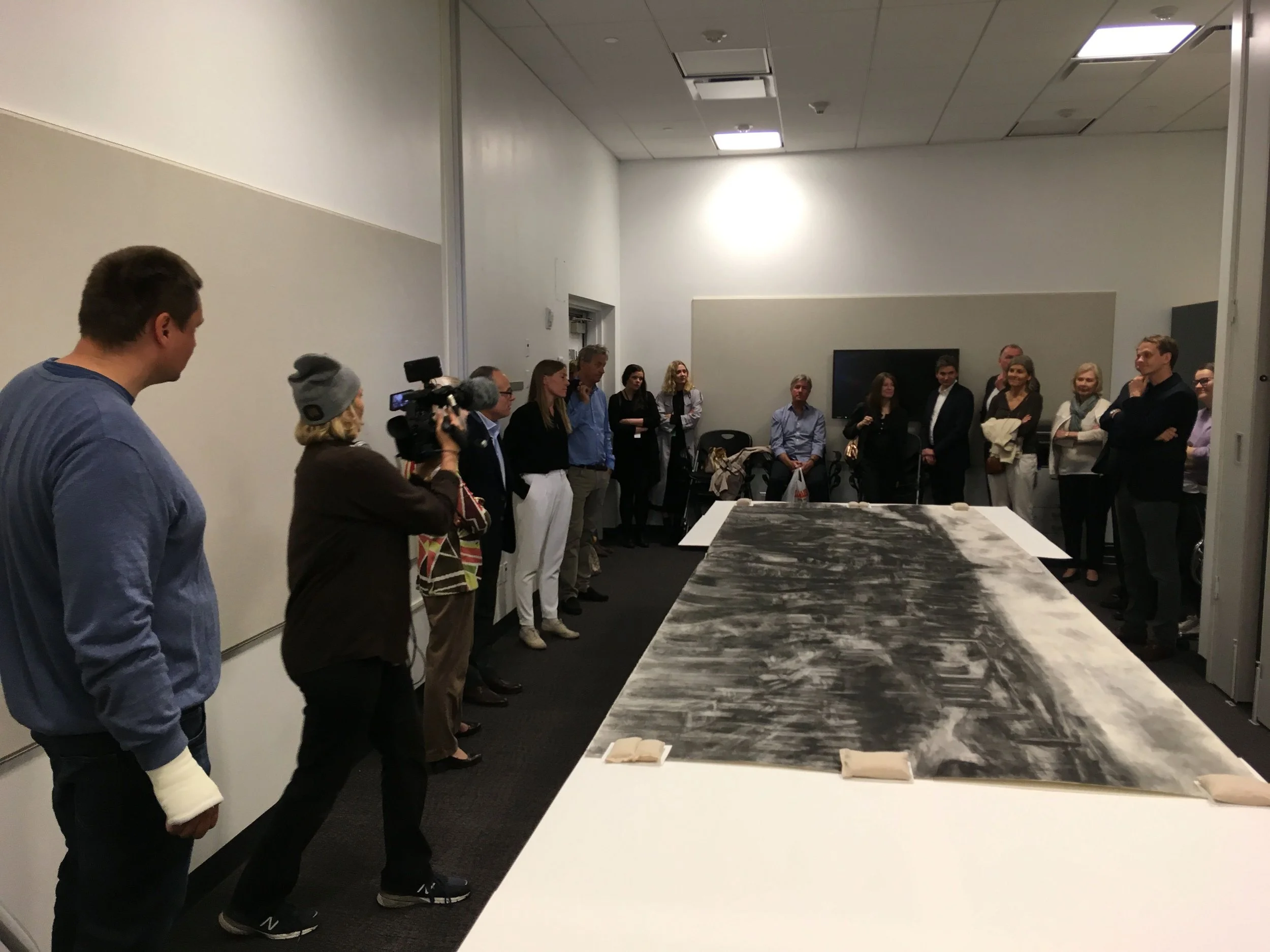
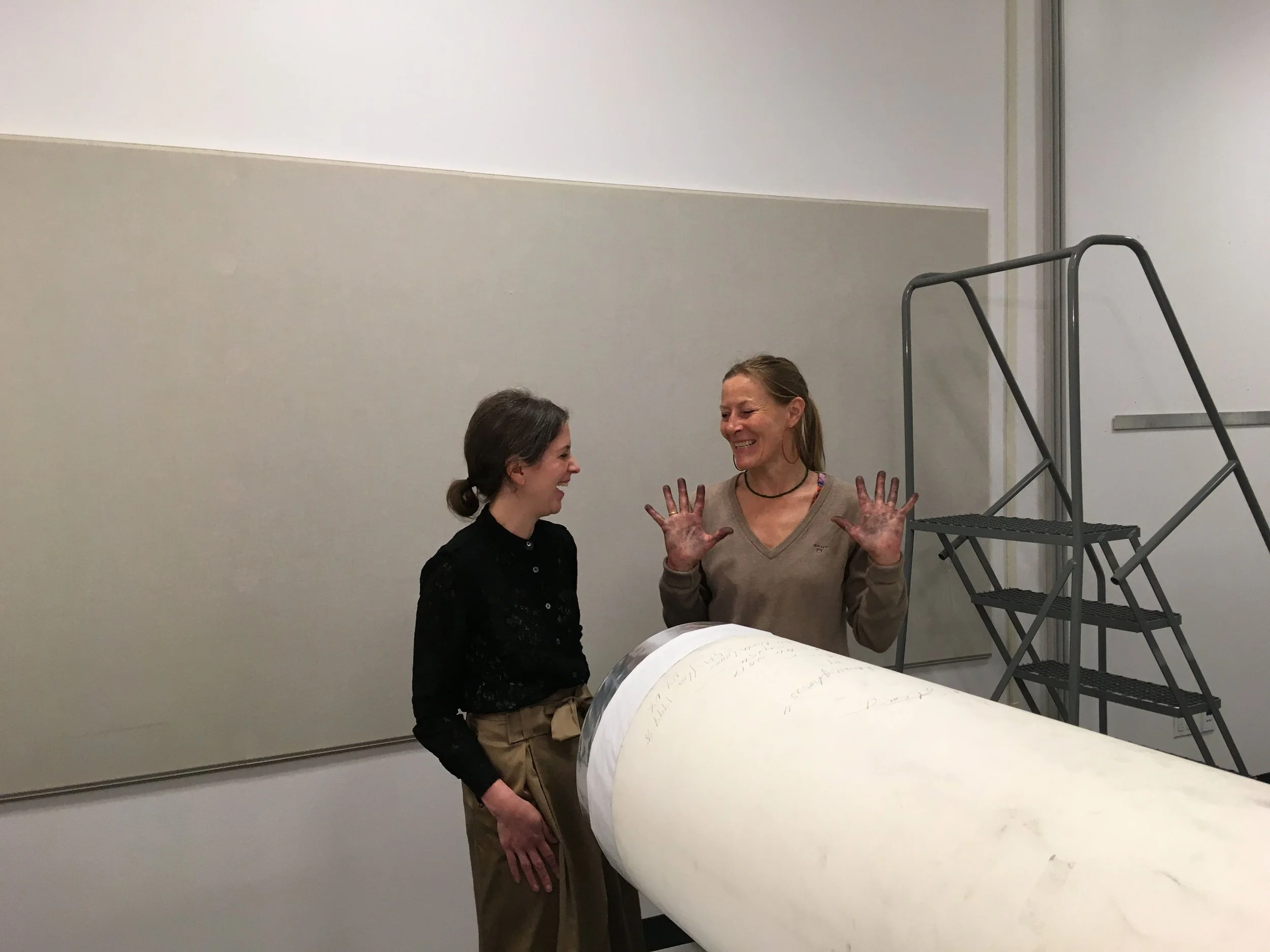
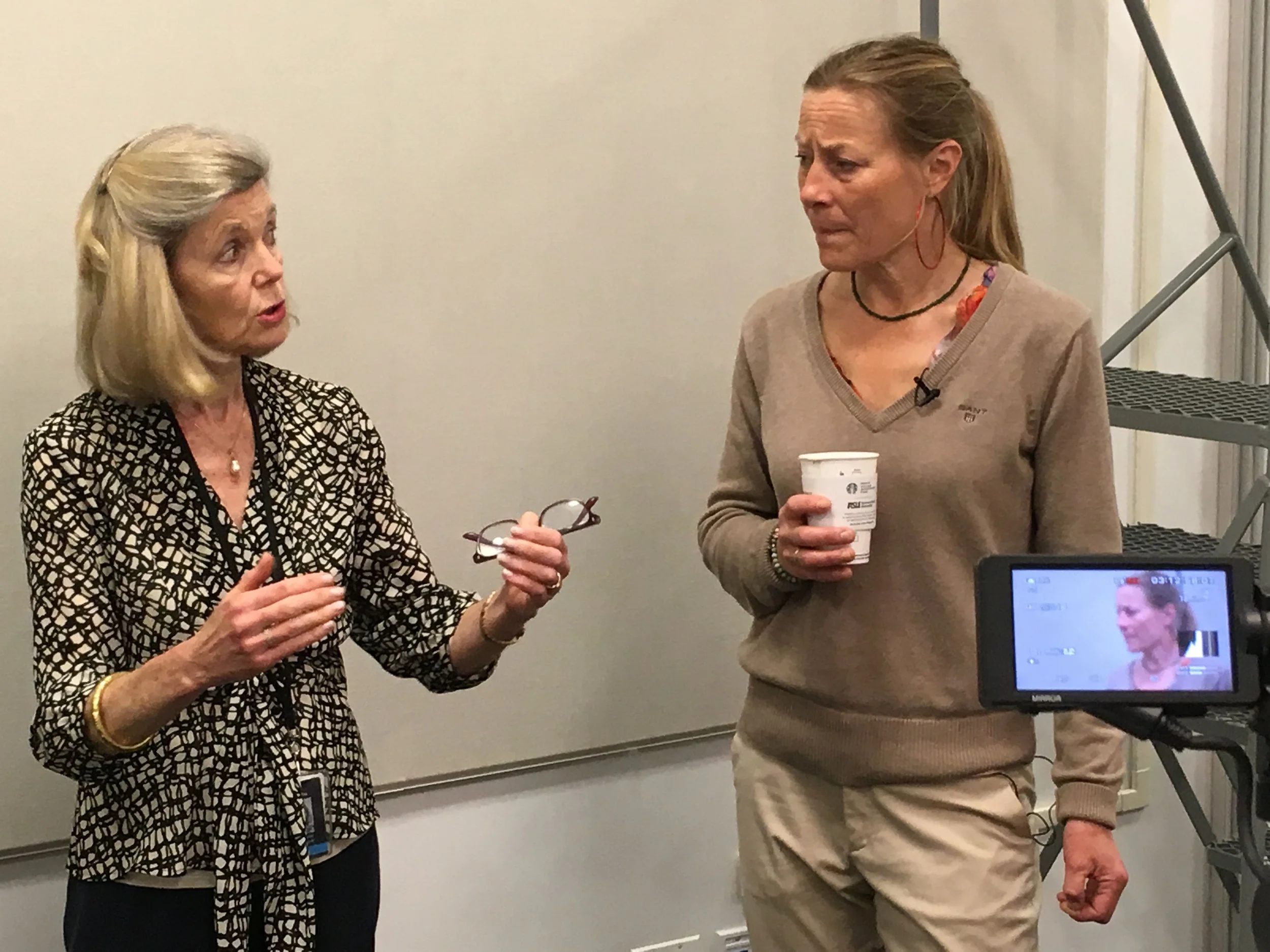
Photos below by Marianne Jacobsen, Manahatta Images Production, New York
The shooting of Return of a View short documentary film by Director Eivind Tolås
Manahatta Images Productions and Helen Tschudi https://www.linkedin.com/in/helen-tschudi-13a09b30/
Chief Curator Jan Seidler Ramirez and paper, conservator Lisa Conte and a representativ from Snøhetta Architects New York office.
*Norwegian Library : Link to the short documentary film Return of a View